
Frequently Used Workers’ Compensation Phrases in Connecticut
Frequently Used Workers’ Compensation Phrases in Connecticut
Navigating a Workers’ Compensation case can often feel like learning a new language. Legal jargon, medical acronyms, and specific form numbers can be overwhelming for an injured worker.
Below is an expanded, numbered guide to the most common phrases used by attorneys, insurance adjusters, and doctors in Workers’ Compensation proceedings.
- General Roles and People
- Claimant: The injured worker who is filing the claim for benefits.
- Respondent: The employer and/or their insurance company that is “responding” to the claim.
- Commissioner: The administrative judge who presides over Workers’ Compensation hearings and makes rulings on disputed issues.
- TPA (Third Party Administrator): An outside company hired by a self-insured employer to process and manage Workers’ Compensation claims.
- Disability and Work Capacity Status
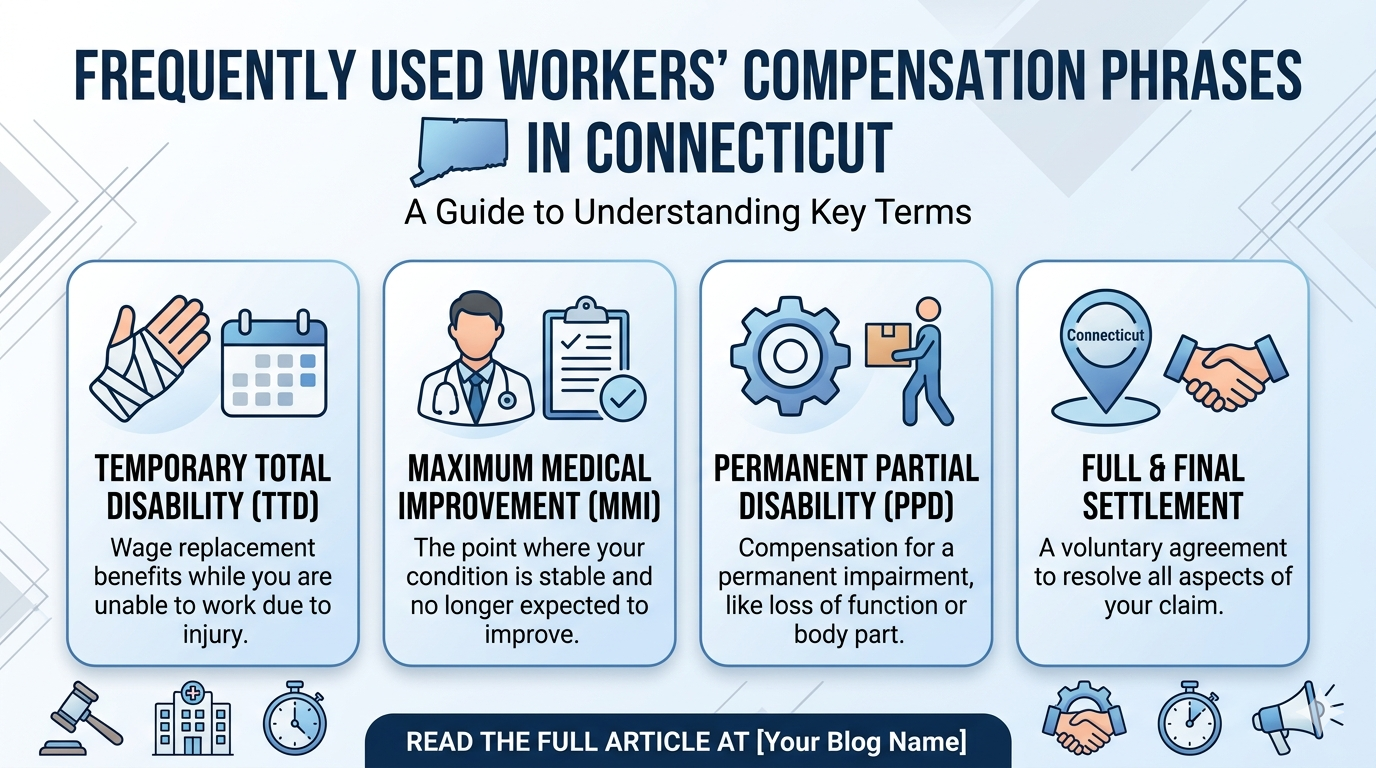
- TT (Temporary Total Disability): A status assigned by a doctor when an injured person is completely incapable of performing any level of work. While “TT,” the worker typically receives weekly indemnity checks.
- TP (Temporary Partial Disability): Often called “Light Duty.” This means the worker is injured but capable of some level of work. To receive benefits while TP, a worker may need to perform a “job search” if the employer cannot accommodate their restrictions.
- PPD (Permanent Partial Disability): A permanent loss of function to a specific body part (e.g., a 10% loss of use of the back) assigned after the worker has finished active treatment.
- PTD (Permanent Total Disability): A status for workers whose injuries are so severe that they will never be able to return to any form of gainful employment.
- MMI (Maximum Medical Improvement): The point at which a doctor determines that a patient’s condition has stabilized and no further functional improvement is expected from additional medical treatment.
- Medical Examinations
- RME (Respondent’s Medical Examination): An evaluation performed by a doctor chosen and paid for by the insurance company to provide a second opinion on the case.
- IME (Independent Medical Examination): Often used interchangeably with RME, though truly “independent” exams are rare as they are usually requested by one side or the other.
- CME (Commissioner’s Medical Examination): A “tie-breaker” exam ordered by the Commissioner when the Claimant’s treating doctor and the Respondent’s RME doctor disagree on a key issue (like surgery or PPD rating).
- Benefits and Legal Awards
- 31-308a Benefits: Discretionary weekly benefits paid after PPD benefits are exhausted. These are intended to help workers who have a permanent impairment and are earning less than they did before the injury.
- Stipulation (Settlement): A full and final closing of a case for a lump sum of money. By “stipulating,” the worker usually gives up all future rights to medical care and weekly checks in exchange for the payment.
- VA (Voluntary Agreement): An official document (traditionally printed on green paper) that signifies the insurance company has formally accepted the injury or a specific PPD rating as compensable.
- COLA (Cost of Living Adjustment): Annual increases in the compensation rate for certain long-term total disability claims.
- Essential Forms
- Form 30C: The primary form used to initiate a Workers’ Compensation claim. It provides official notice of the injury to the employer and the Commission.
- Form 36: A notice issued by the insurance company stating its intent to stop or reduce weekly benefits (e.g., because a doctor says the worker can return to work).
- Form 42: A specific request sent to a physician to provide a permanent partial disability (PPD) rating.
- Form 1A: A “filing status” form used to determine the worker’s tax filing status and dependents, which affects the calculation of the weekly compensation rate.
- The Hearing Process
- Informal Hearing: A 15-to-20-minute meeting where lawyers and the Commissioner discuss disputed issues to try to reach a recommendation or settlement without a trial.
- Pre-Formal Hearing: A more structured meeting used to narrow down the evidence and witness lists in preparation for a trial.
- Formal Hearing: A full legal trial. Evidence is submitted, witnesses testify under oath, and the Commissioner eventually issues a written, binding “Finding and Award” or “Finding and Dismissal.”
- C.R.B. (Compensation Review Board): The appellate body that hears appeals from decisions made by Commissioners at Formal Hearings.
- Modern & Technical Terms
- Utilization Review (UR): A process where a third-party medical professional reviews a treating doctor’s requested treatment (like an MRI or Physical Therapy) to decide if it is “medically necessary.”
- AWW (Average Weekly Wage): The calculation of the worker’s gross earnings (usually over the 52 weeks prior to injury) is used to determine the weekly benefit amount.
- Comp Rate: The actual dollar amount a worker receives weekly, which is typically a percentage of their AWW (subject to state maximums and minimums).
