
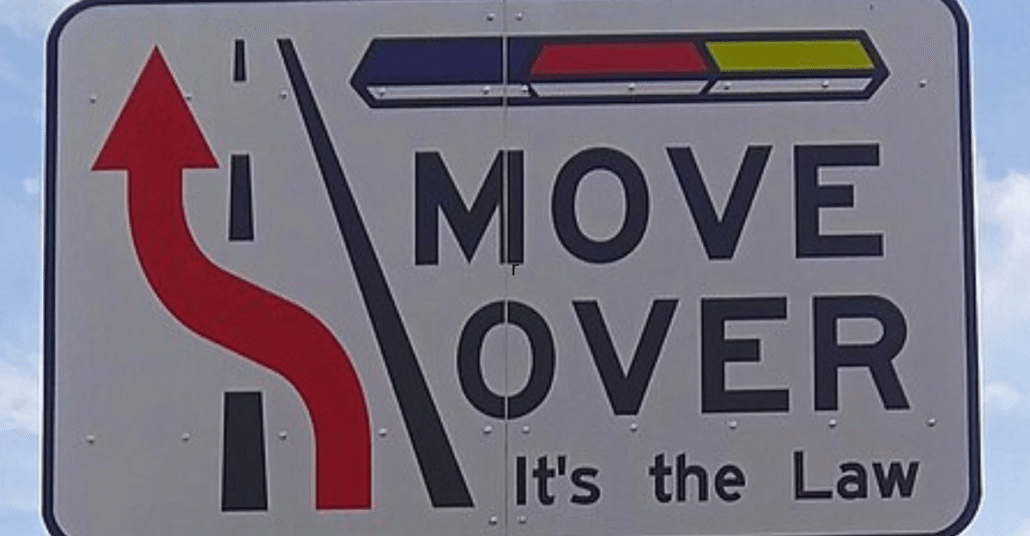
What Is Connecticut’s Move Over Law – and Who’s Liable When Drivers Ignore It?
The busy highways across our state present daily hazards for motorists, particularly when a sudden vehicle breakdown or emergency forces you onto the narrow shoulder. Navigating congested corridors like I-95 through Fairfield County or the winding stretches of Route 15 (the Merritt Parkway) requires sharp reflexes and unwavering attention. When a driver ignores state safety mandates and fails to provide a safe buffer for stationary vehicles, the resulting high-speed shoulder collisions frequently lead to catastrophic injuries.
How Does the Move Over Law Work in Connecticut?
Under Conn. Gen. Stat. Sec. 14-283b, Connecticut’s Move Over Law requires drivers approaching any stationary vehicle on the shoulder to immediately reduce their speed to a reasonable level. If traveling on a multi-lane highway, the driver must also move over one lane to provide a safe buffer.
The statutory framework governing highway shoulder safety mandates very specific driving maneuvers to prevent rear-end and side-impact collisions. When operating a motor vehicle on major interstates like I-84 or I-91, maintaining your lane at highway speeds while passing a stopped vehicle creates an incredibly dangerous environment for anyone standing near the breakdown lane. State lawmakers established these rules to guarantee that vulnerable individuals fixing flat tires or responding to medical emergencies have the physical space necessary to survive on the side of the road.
The requirement to alter your driving behavior applies the moment you spot a stationary vehicle ahead. On roads that provide two or more lanes of undivided traffic proceeding in the same direction, motorists hold a strict legal duty to vacate the lane immediately adjacent to the stopped vehicle. If heavy traffic congestion makes a safe lane change physically impossible, the law dictates that the operator must drastically reduce their speed to a level safely below the posted limit.
Recent legislative expansions through Public Act 23-40 also updated the mandate for smaller local routes. On two-lane undivided roads where a lane change into oncoming traffic would be hazardous, drivers must significantly decelerate when approaching the stationary vehicle. These regulations exist because the kinetic energy generated by a vehicle traveling sixty-five miles per hour leaves practically zero margin for error if an unexpected gust of wind or momentary distraction pulls the moving car slightly off the travel lane.
What Types of Vehicles Are Protected Under Conn. Gen. Stat. Sec. 14-283b?
The law strictly protects emergency vehicles displaying flashing lights, including police cruisers, fire trucks, ambulances, and tow trucks. Following recent expansions, the statute also requires drivers to move over or slow down for any standard, nonemergency civilian vehicle stopped on the highway shoulder.
Historically, roadside safety statutes focused exclusively on protecting first responders and highway maintenance workers. Recognizing the universal danger of shoulder collisions, the legislature expanded the legal protections to cover every single motorist forced to stop on the edge of the roadway.
The specific categories of protected vehicles under Connecticut law include:
- Law enforcement cruisers operated by the Connecticut State Police or municipal departments.
- Fire engines and emergency medical service ambulances responding to active scenes.
- Commercial tow trucks actively assisting disabled passenger cars.
- State Department of Transportation (CT DOT) highway maintenance vehicles.
- Standard civilian passenger vehicles, pickup trucks, and motorcycles stopped in the breakdown lane.
This broad application means that everyday commuters dealing with an overheated engine in Bridgeport or a blown tire outside Waterbury enjoy the exact same legal protections as a state trooper conducting a traffic stop. The statutory duty established under Connecticut General Statutes Section 14-283b to slow down or change lanes does not depend on the presence of flashing hazard lights or emergency flares, although utilizing those safety devices remains a highly recommended practice. If a vehicle is visibly stationary on the shoulder, approaching drivers must execute the required safety maneuvers without hesitation.
What Are the Penalties for Ignoring Roadside Safety Rules?
Violating Connecticut’s Move Over Law is generally classified as a traffic infraction. However, if a driver fails to move over and causes physical injury to an emergency vehicle occupant, they face criminal fines up to $5,000, and up to $20,000 if the violation results in death. Law enforcement agencies take roadside safety violations seriously, heavily patrolling busy sections of Hartford County and New Haven County to enforce the statute.
When a motorist simply fails to change lanes or reduce speed while passing a stopped vehicle, the responding officer will typically issue a standard traffic citation. While this initial fine serves as a basic deterrent, the legal consequences escalate dramatically when the negligent behavior causes actual physical harm.
Following the passage of Public Act 25-159, the state drastically increased the financial penalties for severe violations involving emergency personnel. If a driver strikes a stationary emergency vehicle and injures a first responder, the resulting fine can reach five thousand dollars. If the collision results in a fatality, the penalty maxes out at twenty thousand dollars. These steep criminal fines reflect the profound societal interest in protecting those who risk their lives managing highway crash scenes.
From a civil litigation perspective, these traffic citations provide undeniable leverage against the at-fault driver’s insurance carrier. When a state trooper issues a formal ticket for violating the Move Over statute, that citation becomes a permanent part of the official police crash report. The legal team utilizes these documented traffic infractions to shut down the standard defense arguments frequently deployed by corporate insurers attempting to deny liability.
How Does a Move Over Law Violation Prove Negligence?
When a driver ignores the Move Over Law and causes a crash, their traffic violation serves as concrete evidence of negligence per se. Breaching this statutory duty of care makes it significantly easier to establish legal liability in a Connecticut personal injury claim. Establishing fault in any motor vehicle crash requires proving that the responsible party breached their legal duty to operate their vehicle safely. When a driver disobeys a specific safety statute, their actions move beyond simple carelessness. The legal doctrine of statutory negligence allows an injured victim to demonstrate that the at-fault motorist failed to uphold the mandated standard of care simply by proving the traffic law was broken.
When presenting a case in Hartford Superior Court or during aggressive settlement negotiations, documenting the statutory violation fundamentally shifts the dynamics in your favor. Insurance adjusters frequently attempt to argue that the victim was standing too close to the travel lane or that the accident was simply unavoidable due to sudden weather changes. A documented failure to change lanes directly contradicts those defenses by highlighting an intentionally reckless driving environment.
To build an unassailable claim for liability, our attorneys gather specific objective evidence from the scene:
- The official police crash narrative detailing the exact positioning of the vehicles.
- Electronic data from the moving vehicle’s event data recorder (black box) proving a failure to brake.
- Independent eyewitness testimony confirming the at-fault driver maintained their highway speed.
- Highway traffic camera footage capturing the moments leading up to the impact.
- Cellular phone records to determine if digital distraction caused the driver to drift onto the shoulder.
By preserving this data immediately, we force the insurance company to take the matter seriously. Demonstrated traffic violations effectively restrict a defense lawyer’s ability to deny fault, allowing your legal team to demand a higher settlement value for your sustained injuries.
What If I Was Partially at Fault for the Shoulder Collision?
Under Connecticut’s modified comparative negligence statute, you can still recover financial compensation provided you were not 51 percent or more at fault for the crash. Your final settlement will simply be reduced by your assigned percentage of blame. A highly common concern for victims injured on the side of the road is whether their own actions might completely bar their ability to seek financial justice. You might have parked your vehicle slightly over the solid white line, or perhaps your hazard lights malfunctioned just before the impact.
Corporate insurance adjusters love to weaponize these minor details, aggressively attempting to shift the blame onto the injured party to save their company money. The state legal system accounts for these complex scenarios through Connecticut’s comparative negligence statute, which establishes a modified comparative fault framework. This law ensures that innocent victims still have a viable path to financial recovery even if they made a minor mistake. If a jury determines that your failure to properly deploy reflective triangles contributed 20 percent to the cause of the crash, your total awarded damages will be reduced by that exact 20 percent.
The critical threshold in our state is 51 percent. As long as your assigned share of the liability remains at 50 percent or lower, you retain the legal right to pursue compensation from the primarily at-fault driver. Our skilled attorneys anticipate these common defense tactics and proactively build a strong narrative demonstrating that the oncoming driver’s failure to slow down was the primary, overwhelming cause of the catastrophic collision.
What Compensation Can Roadside Crash Victims Recover?
Injured victims can claim economic damages to cover hospital bills, physical therapy, property damage, and lost wages. Furthermore, they can recover non-economic damages to provide financial relief for physical pain, emotional trauma, and long-term physical impairment caused by the collision. The physical toll of a high-speed shoulder impact often requires immediate, life-saving intervention at major regional trauma centers like Hartford Hospital or Stamford Hospital.
When a heavy passenger vehicle strikes a stationary car, the occupants and anyone standing nearby absorb tremendous kinetic energy directly. Victims frequently present with highly complex medical conditions, ranging from traumatic brain injuries and cervical spine fractures to severe internal bleeding and crushed extremities.
Civil law allows injured individuals to seek comprehensive financial compensation to cover both their immediate emergency needs and their long-term, permanent losses. Economic damages represent objective, quantifiable financial losses backed by actual receipts and formal documentation.
This category of compensation includes:
- Emergency room invoices, surgical costs, and highly specialized physical therapy expenses.
- Future estimated medical care required for permanent disabilities or ongoing pain management.
- Lost wages representing the exact income missed from work during the initial physical recovery.
- Diminished earning capacity if the severity of the injuries forces an unplanned retirement.
- Property damage covering comprehensive vehicle repairs or fair-market total loss replacement.
- Out-of-pocket expenses for medical transportation while your personal vehicle is completely destroyed.
Non-economic damages compensate victims for the profound human impact of the crash. This encompasses severe physical pain and suffering, crushing emotional distress, post-traumatic anxiety, loss of enjoyment of life, and permanent physical scarring. The financial and emotional cost of recovering from these traumas extends far beyond the initial hospital stay, permanently altering how a victim interacts with their family and goes about their daily routine.
What Steps Should You Take After a Highway Shoulder Wreck?
After a roadside crash, immediately contact the Connecticut State Police to secure the chaotic scene and document the Move Over violation. Seek prompt emergency medical evaluation, photograph vehicle positions if safe to do so, and consult a qualified personal injury attorney before providing recorded statements. The moments following a highway collision are incredibly disorienting, but the actions you take before leaving the scene dramatically impact your ability to secure fair compensation later. The priority must always be physical safety.
If your vehicle is disabled in a highly dangerous position along a busy interstate curve, remain inside with your seatbelt fastened until law enforcement arrives to block the travel lanes.
Protecting your legal rights requires a systematic approach to preserving vital evidence:
- Dial emergency services immediately to ensure the at-fault driver cannot convince you into handling the situation privately without an official police report.
- Accept medical attention at the scene. An intense surge of adrenaline frequently masks the immediate symptoms of whiplash, concussions, or internal bleeding.
- Photograph the accident scene from multiple angles if you can do so without walking into moving traffic. Capture the final resting positions of the vehicles, skid marks, and any debris scattered across the lane.
- Collect contact information from independent eyewitnesses who saw the oncoming driver fail to change lanes.
- Refuse to provide a recorded statement to the at-fault driver’s insurance adjuster. They are highly trained negotiators looking for any excuse to minimize your claim
By following these specific steps, you provide your legal team with the foundational evidence needed to build a compelling demand package and hold the negligent motorist fully accountable.
Protect Your Rights with Dodd Law Firm
Coping with the immense physical and financial fallout of a highway shoulder collision is an exhausting ordeal, but you absolutely do not have to face aggressive insurance companies alone. Dodd Law Firm provides highly dedicated legal representation to injury victims throughout Hartford, New Haven, and Fairfield counties. Our knowledgeable attorneys handle every single aspect of your claim, from complex evidence preservation and accident reconstruction to rigorous negotiations with corporate insurers. We understand the immense financial strain you are currently experiencing.
Contact us today to schedule your free, completely confidential consultation and take the first step toward securing your family’s financial stability.
Frequently Asked Questions
Does the Move Over Law apply to two-lane local roads?
Yes, recent legislative updates expanded the law to include two-lane undivided roads. If you cannot safely change lanes due to oncoming traffic, you are legally required to significantly reduce your speed below the posted limit when passing a stopped vehicle
Do I have to change lanes if traffic is too heavily congested?
If heavy traffic makes a safe lane change impossible on a multi-lane highway, the statute dictates that you must immediately reduce your speed to a reasonable and safe level. You must proceed with extreme caution until you have fully passed the stationary vehicle.
Can I be sued if I hit a disabled vehicle in Connecticut?
Yes, if you fail to obey the statutory mandates to slow down or move over, the injured occupants of the disabled vehicle can file a civil personal injury lawsuit against you. Your failure to uphold the legal standard of care establishes a strong foundation for liability.
What if the stopped vehicle didn’t have its hazard lights on?
The law requires approaching drivers to slow down or move over for any visibly stationary vehicle on the shoulder, regardless of whether the hazard lights are actively flashing. While hazard lights increase visibility, their absence does not excuse the oncoming driver’s failure to react safely.
Will my settlement cover future surgeries required from the crash?
Yes, a comprehensive personal injury settlement accounts for all future estimated medical costs related to the accident. Your legal team will work closely with medical professionals to accurately calculate the financial impact of any anticipated surgeries or long-term physical therapy needs.


Leave a Reply
Want to join the discussion?Feel free to contribute!